
How to Negotiate a Car Price: The Complete Used Car Negotiation Guide in 2026
How to Negotiate a Car Price

Introduction
Buying a used car? The sticker price is just the starting point. Most buyers overpay because they don’t negotiate—or negotiate poorly. Learning how to negotiate a car price can save you $500-$3,000 on your next purchase.
This guide covers proven strategies to get the best deal on a used car, whether you’re buying from a dealer or private seller.
How to Negotiate a Car Price: Do Your Homework First
Research is your biggest advantage. Walk into a dealership armed with data, and you control the conversation.
Check Multiple Pricing Sources
Use these tools to find fair market value:
| Pricing Tool | Best For | Key Feature |
|---|---|---|
| Kelley Blue Book (KBB) | Overall value estimates | Industry-standard pricing |
| Edmunds | True Market Value | Real transaction data |
| CarGurus | Local market pricing | Real-time listings comparison |
| NADA Guides | Dealer perspectives | Trade-in valuations |
| TrueCar | What others paid | Actual purchase prices in your area |
Get the private party value, trade-in value, and dealer retail price. This gives you a negotiation range.
Research the Specific Car
Check the VIN history using Carfax or AutoCheck. Look for:
- Accident history
- Previous owners
- Service records
- Title status
Red flags lower the value—use them as leverage.
Know What Others Paid
Sites like TrueCar and Edmunds show what people in your area actually paid for similar vehicles. This data is gold when negotiating with a car dealer.

How to Negotiate Used Car Prices: Step-by-Step Strategy
Start Below Your Target
Never accept the first price. If a car is listed at $15,000 and KBB says $13,500 is fair, offer $12,500. This gives you room to negotiate up.
Negotiation Starting Points
| Listed Price | Fair Market Value | Your Opening Offer | Target Final Price |
|---|---|---|---|
| $15,000 | $13,500 | $12,500 | $13,000-$13,500 |
| $20,000 | $18,000 | $16,500 | $17,500-$18,000 |
| $10,000 | $9,000 | $8,200 | $8,700-$9,000 |
Use the “Out-the-Door” Strategy
Ask: “What’s your best out-the-door price?”
This forces dealers to include:
- Taxes
- Registration fees
- Documentation fees
- Any dealer add-ons
Many dealers advertise low prices but inflate the final cost with hidden fees.
Let Silence Work for You
After making an offer, stop talking. The first person to speak usually loses. Dealers are trained to fill silence—let them counter.
Negotiate the Car Price Separately
Don’t mention:
- Your trade-in (negotiate this after the purchase price)
- Financing (secure pre-approval from your bank first)
- Monthly payment goals (dealers manipulate loan terms to hit your number)
Focus solely on the car’s selling price.
Also Read: How Long Do Car Batteries Last? in 2026 guide for Beginners
How to Negotiate with a Car Dealer: Counter Their Tactics
Dealers have specific tactics. Counter them:
| Dealer Tactic | What They’re Doing | Your Counter-Move |
|---|---|---|
| “Let me talk to my manager” | Stalling to wear you down | “I’ll wait, but my offer stands. I have other options.” |
| Lowballing your trade-in | Increasing their profit margin | Show KBB/Edmunds research for your trade |
| “This price is only good today” | Creating false urgency | “I need time to think. If it sells, it wasn’t meant to be.” |
| Focusing on monthly payment | Hiding total cost in loan terms | “What’s the total price? I’ll handle financing separately.” |
| Adding dealer fees/add-ons | Padding the final bill | “Which fees are negotiable? I don’t need add-ons.” |

Tips for Negotiating a Used Car: Timing and Leverage
Timing Matters
| When to Buy | Why It Works | Potential Savings |
|---|---|---|
| End of month | Salespeople need to hit quotas | $300-$800 |
| End of quarter | Dealership bonuses kick in | $500-$1,200 |
| Weekdays | Less buyer competition | $200-$500 |
| December | Year-end clearance | $400-$1,000 |
| Rainy/snowy days | Low foot traffic | $200-$600 |
Point Out Flaws
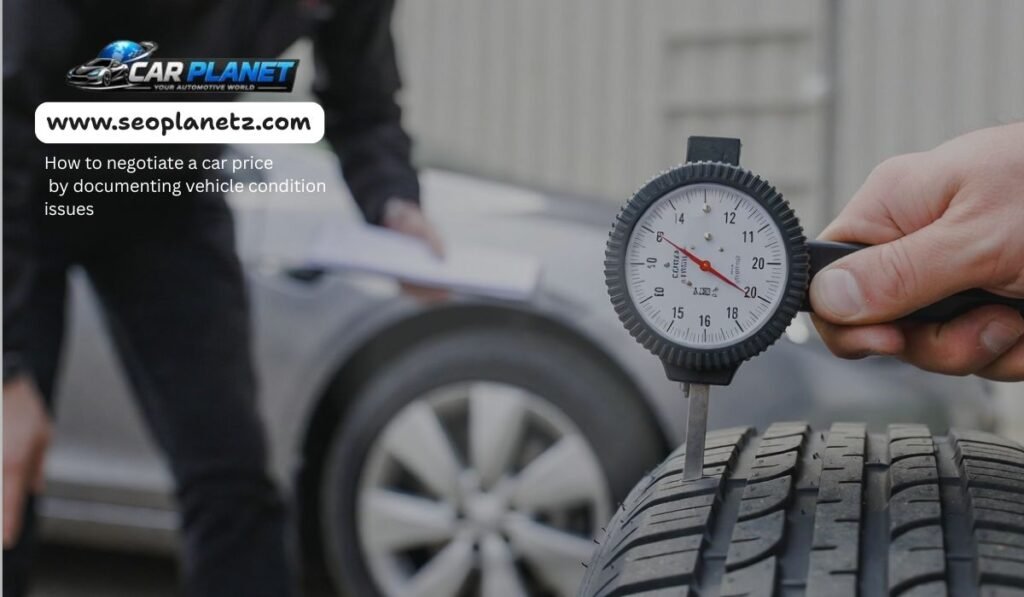
Notice worn tires, scratches, or maintenance needs? Document everything. Each issue justifies a lower price.
“I see the tires need replacing—that’s $600. The front bumper has a dent. I’m willing to take it as-is if you adjust the price.”
Also Read: How to Jump-start a car Safely in 2026?
Have Alternatives Ready How to Negotiate a Car Price
Never negotiate from desperation. Reference other vehicles you’re considering:
“I found a similar 2019 Honda Accord for $14,200 at [Competing Dealer]. Can you match or beat that?”
Know Your Walk-Away Number
Decide your maximum price before arriving. If negotiations exceed it, leave. Sometimes walking away brings dealers back with better offers.
How to Get the Best Deal on a Used Car: Dealer vs. Private Seller
Comparison: Dealer vs. Private Seller Negotiations
| Factor | Dealer | Private Seller |
|---|---|---|
| Average Price | 10-20% higher | Lower (no markup) |
| Negotiation Room | $500-$2,000 | $300-$1,500 |
| Fees | Doc fees, dealer prep | None (just title transfer) |
| Warranty | Often included/available | As-is (usually) |
| Financing | Available (higher rates) | Cash or your own loan |
| Best Leverage | Competing quotes, timing | Cash offers, pointing out issues |
| Inspection | May resist | Usually accepts |
Dealer Negotiations
Leverage points:
- Dealer fees are negotiable
- Extended warranties are marked up 50-200%
- Documentation fees shouldn’t exceed $200-300
Private Seller Negotiations
Approach:
- Be respectful but firm
- Cash offers carry weight
- Request maintenance records
- Get a pre-purchase inspection ($100-150 investment that often reveals $500+ in needed repairs)
For more tips on private party purchases, check out Consumer Reports’ used car buying guide.
Common Used Car Negotiation Mistakes to Avoid
| Mistake | Why It Costs You | Better Approach |
|---|---|---|
| Falling in love with one car | Zero negotiation leverage | Have 3-5 backup options |
| Negotiating monthly payments | Hides true cost in long loans | Focus on total price only |
| Ignoring fees | $500-$1,500 in hidden costs | Get out-the-door price upfront |
| Skipping test drive | Miss mechanical issues | Always test drive first |
| Not getting pre-approved | Pay 1-3% higher interest | Get bank/credit union approval |
| Trading in without research | Lose $1,000-$3,000 on trade | Know your trade value first |
How to Talk Down a Used Car Price: Final Tactics
The “I Need to Think About It” Strategy
After your best offer: “I appreciate your time, but I need to think about it.”
This often triggers: “Wait—let me see what I can do.”
Ask for Add-Ons Instead
If they won’t budge on price:
| Add-On to Request | Typical Value | Dealer Cost |
|---|---|---|
| 6 months oil changes | $150-$300 | $50-$100 |
| Full tank of gas | $50-$80 | $50-$80 |
| Floor mats/accessories | $100-$200 | $30-$60 |
| Extended warranty upgrade | $500-$1,500 | $200-$500 |
| Window tinting | $200-$400 | $80-$150 |
How to Negotiate a Car Price Get Everything in Writing
Before signing:
- Verify the final price
- Confirm all fees
- Review warranty terms
- Check return policy
Never sign on impulse. Take the contract home and review it carefully.
Learn more about protecting yourself during the purchase at the Federal Trade Commission’s car buying guide.
FAQs: How to Negotiate a Car Price
Can you negotiate used car prices at every dealer?
Yes. Even “no-haggle” dealers like CarMax sometimes negotiate on trade-ins or offer price matching.
How much below asking price should I offer?
Start 10-15% below asking for dealer cars, 15-20% for private sellers. Adjust based on market research.
What if the dealer won’t negotiate?
Walk away. Either they’ll call you back with a better offer, or you’ll find a better deal elsewhere.
Should I negotiate via email or in person?
Email establishes a paper trail and removes pressure. But final negotiations work best in person where you can read reactions.
How do I negotiate if I have bad credit?
Focus on the car price first. Get pre-approved through a credit union that works with lower scores. Never let the dealer run your credit until you’ve agreed on a price.
What’s the best day How to negotiate a car price?
Weekday mornings at month-end offer the best negotiation opportunities when dealer traffic is low and sales quotas need to be met.
Conclusion: Master How to Negotiate a Car Price
Learning how to negotiate a car price—especially for used vehicles—puts thousands back in your pocket. The key steps:
- Research fair market value using KBB, Edmunds, and CarGurus
- Start low and focus only on the car price
- Use silence and competitor prices as leverage
- Document flaws to justify lower offers
- Know your walk-away number
Remember: The best deal is the one you’re willing to walk away from. Dealers need to sell cars more than you need to buy today.
Start your negotiation prepared, stay confident, and you’ll drive away with the best deal on a used car—and money still in your pocket.